
How to apply for the Swiss premium subsidy — IPV for expats.
Individuelle Prämienverbilligung (IPV) is the cantonal subsidy for moderate-income households. Each canton runs its own thresholds, application path, and timing. Most newcomers qualify in year 2 once a Swiss tax assessment exists — but year 1 is achievable with a manual application.
Updated

45 minutes with Robert. Free.
In English · With or
We'll send you a short intake form so we understand your needs before we speak.
Your details
You're booked
Check your email for a calendar invite and a video call link.
In brief
IPV (Individuelle Prämienverbilligung) is the cantonal premium-reduction subsidy required by federal law (Art. 65 KVG). Each Swiss canton runs its own scheme: thresholds, evaluation method, application path, payment timing. Geneva and Vaud have the most generous bands — single households up to ~CHF 60,000–70,000 taxable typically qualify. Zürich, Bern, Basel-Stadt mid-range. Zug, Lucerne, Schwyz tighter. Most cantons evaluate automatically based on tax data — but only after a Swiss tax assessment exists. New arrivals don't have one in year 1; the manual application using salary contract or tax-at-source statement as provisional income evidence unlocks year-1 subsidy where eligible. Typical year-1 lift: CHF 100–250/month per adult. Compounded over a 3-year assignment, materially reduces total premium burden.
A letter from your canton.
Individuelle Prämienverbilligung (IPV) is the cantonal subsidy for moderate-income households. Each canton runs its own thresholds, application path, and timing.
The subsidy goes to your insurer: cantons pay it directly to the insurer (Art. 65 §1 KVG), which reduces the monthly invoice.

IPV application — step by step.
-
Confirm your canton runs IPV
All 26 cantons run IPV per Art. 65 KVG. Each operates its own scheme. Find your canton's portal: SVA Zürich (Zürich), SAM (Geneva), OVAM (Vaud), Amt für Sozialbeiträge (Basel-Stadt), SVA Bern (Bern), Ausgleichskasse Zug (Zug), IAS Ticino (Lugano). Confirm the application route and evaluation method.
-
Estimate your taxable income
Taxable income, not gross salary. Apply standard deductions: pillar 3a, professional expenses, child allowances, commuting, training. The income figure that matters is what would appear on your eventual cantonal tax assessment — typically 70–85% of gross salary depending on deductions. Many newcomers confuse gross with taxable and miss the threshold.
-
Compare against your canton's threshold band
Geneva, Vaud most generous: single up to ~CHF 60–70k taxable. Zürich, Bern mid-range: single ~CHF 50–60k. Zug, Lucerne, Schwyz tighter: ~CHF 50–55k. Family thresholds substantially higher (often +CHF 30–50k per child). Partial-subsidy bands extend further — don't disqualify yourself on the first threshold without checking the partial band.
Tip Geneva's SAM band reaches up to ~CHF 90k for a single household at the partial-subsidy edge. The cut-off you read first is usually the full-subsidy line, not the partial-subsidy line.
-
Apply manually in year 1 with provisional income evidence
Most cantons evaluate automatically only after a Swiss tax assessment exists. New arrivals (no prior Swiss tax year) need to apply manually with provisional evidence: signed Swiss employment contract, recent salary slips, tax-at-source statement (Quellensteuer). Submit via the cantonal portal or mail. Some cantons (Geneva, Vaud) have well-trodden manual paths; others require persistent follow-up.
-
Wait for the decision and check your invoice
Cantonal evaluation typically takes 6–12 weeks. Decision arrives by post (in most cantons) or via the portal. The subsidy goes to your insurer: cantons pay it directly to the insurer (Art. 65 §1 KVG), which reduces the monthly invoice. Check that the reduction appears on your invoice.
-
Reapply or auto-renew each year
IPV is annual. Some cantons (Geneva, Vaud) auto-renew based on the latest tax assessment. Some require an explicit reapplication. Income changes during the year don't trigger automatic adjustment — a major raise mid-year doesn't end the subsidy until the next evaluation cycle. Conversely, an income drop (parental leave, sabbatical) needs a written notification to access an earlier increase.
-
Layer IPV with Franchise + model + canton planning
IPV reduces your effective premium; the four basic-insurance levers (Franchise, model, insurer, canton) compound on top. The 45-minute review covers all five together — IPV + Franchise tier + model fit + insurer selection + cross-canton planning if relevant. The compound saving on a household qualifying for partial IPV typically lands at CHF 200–400/month in year-1 reduction.
What we catch every week.
Trap 01
The gross-vs-taxable mistake
Households read the threshold in CHF and compare against their gross salary. Taxable income is what matters — typically 70–85% of gross after deductions. Many qualify for partial subsidy who self-disqualify on the gross figure.
Trap 02
The year-1 skip
Households assume year 1 isn't possible because there's no Swiss tax assessment yet. Manual application with provisional income evidence is the standard path; cantons evaluate it. Skipping year 1 leaves CHF 1,200–3,000 unclaimed for moderate earners.
Trap 03
The family-threshold miss
Family thresholds run substantially higher than single — often CHF 30–50k extra per child. Households with kids often assume their dual-income household income disqualifies them; the family band usually pulls them back into eligibility.
Trap 04
The partial-subsidy blindness
Cantonal portals usually show the full-subsidy threshold prominently. The partial-subsidy band — graduated reduction up to a higher income ceiling — gets less prominence. Households at incomes above the full threshold but below the partial ceiling miss it entirely.
These four are specific to this topic. The four we check in every review — from the age-curve trap to the 3-month deadline — are in the four traps deep-dive.
A real-pattern case.
Anonymised pattern
An NGO researcher in Geneva, single, age 31, signed CHF 78,000 gross. She'd researched SAM (Geneva's IPV authority), seen the single-household cut-off quoted as CHF 60,000, and self-disqualified. Our review ran the actual taxable-income figure: ~CHF 62,000 after pillar 3a and standard deductions. Geneva's partial-subsidy band reaches well above CHF 60k single. We helped her file the year-1 manual application with the Université de Genève contract as provisional income evidence. SAM granted ~CHF 165/month partial subsidy. Annual lift: CHF 1,980 — net of any basic-insurance switching saving Comparis would have suggested. The application that 'wasn't worth doing' on first read became the largest lever for the household.
Aggregated from real client patterns. Names anonymised; figures illustrative.
Beyond this guide — the 45-minute review.
The 45-minute review with Robert covers the IPV math against your canton's specific thresholds, the manual-application drafting if you're in year 1, and the layering of IPV with Franchise tier + model + insurer choice. Most reviews where IPV applies recover CHF 100–300/month — substantially more than a basic-insurance switch alone. We say 'apply provisionally' more often than the market suggests; the year-1 manual route works in most cantons.
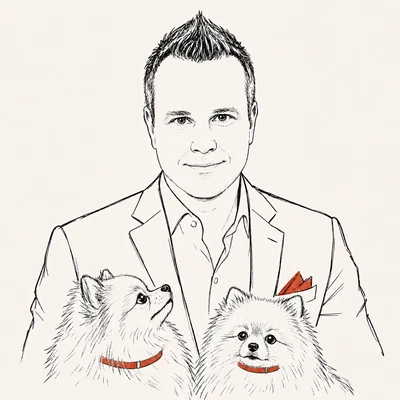
Robert Kolar
Insurance advisor — health insurance specialist
20+ years in Swiss insurance. Reads the basic and supplementary contract for every review. The 45-minute review covers the four-lever framework applied to your address, age, household and existing coverage. German, English, Czech.
Common mistakes.
Reading gross as taxable
The threshold is taxable income — 70–85% of gross after pillar 3a, professional expenses, child allowances. Many qualify who self-disqualify on the gross figure.
Skipping year 1
Year 1 manual application with provisional income evidence is standard practice. Most newcomers who qualify in year 2 also qualify in year 1 if they apply.
Missing the partial-subsidy band
Partial subsidy extends well above the full-subsidy threshold. Cantonal portals don't always show this prominently. Check the partial band before disqualifying.
Not adjusting after income changes
An income drop (parental leave, sabbatical, contract change) needs a written notification to trigger earlier reassessment. Don't wait for the annual cycle.
Forgetting the four-lever stack
IPV reduces effective premium; Franchise tier, model, and insurer choice compound. Optimising all five together typically saves CHF 200–400/month for eligible households.
Frequently asked — apply for premium subsidy (IPV).
What is IPV (Prämienverbilligung) in Switzerland?
Who qualifies for IPV in Switzerland?
Can I apply for IPV in my first year in Switzerland?
How much IPV can I receive?
Is IPV taxable income?
Where does the IPV payment go — to me or to my insurer?
How long does the IPV decision take?
Do I need to reapply each year?
Premium subsidy, read properly.
We've been running IPV applications for expats since 2017. The threshold math against your specific taxable income, the year-1 manual route, the partial-subsidy band most newcomers don't see, the four-lever stack with Franchise + model + insurer. Free, 45 minutes, in English, with Robert. We say 'apply provisionally' more often than the market suggests — the year-1 manual route works.
Book your first Swiss insurance review