
Leaving Switzerland — your pension withdrawal, untaxed where it can be.
Withholding tax on pillar 3a withdrawal varies by canton (Schwyz vs Geneva can differ ~5% on a CHF 500k payout). EU tax-treaty network refunds most or all of it; some non-EU jurisdictions don't. The 45-minute review with Nicole Bohne models the canton-of-withdrawal decision against your destination country's treaty network.
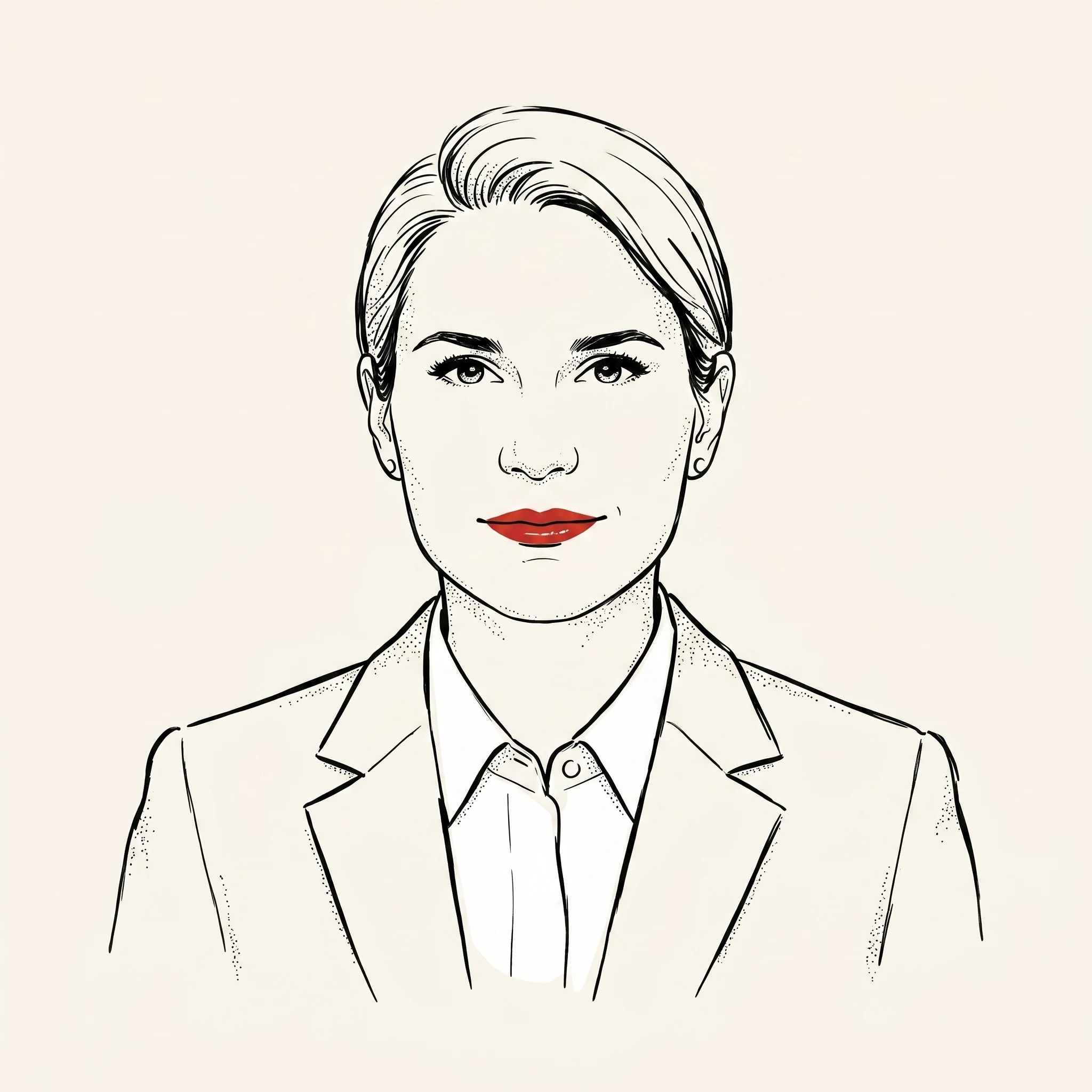
Reviewed by Nicole Bohne, life insurance advisor — life, 3rd pillar, tax optimization · FINMA F01536402 · Last updated 11 June 2026



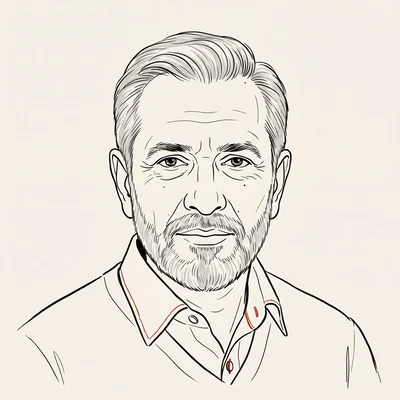
45 minutes with Nicole. CHF 180/hour.
In English · With or
We'll send you a short intake form so we understand your needs before we speak.
Your details
You're booked
Check your email for a calendar invite and a video call link.
In brief
Pillar 3a withdrawal on cantonal-registration deregistration is governed by Article 3 BVV3. The cantonal tariff applies to the canton where the 3a vested-benefits account sits at withdrawal — meaningfully different across Switzerland (Schwyz, Zug, Nidwalden are lowest; Geneva, Vaud, Basel-Stadt highest). On a CHF 500,000 withdrawal the gap is typically CHF 15,000–25,000 of tax. EU-resident treaty network typically refunds the withholding under bilateral agreements (Germany, France, Italy, UK); non-EU residents face residual taxation depending on the destination's pension respect. The vested-benefits-account routing for non-imminent withdrawal (e.g., parking the 3a balance until age 60) preserves tax position and avoids the surprise tariff at deregistration.
Estimate your 3a withdrawal tax by canton.
The cantonal tariff applies to the canton where your 3a account sits at withdrawal — moving the account to a low-tariff canton (Schwyz, Zug, Nidwalden) before withdrawal is a known, generally accepted optimisation. The destination country's tax-treaty respect determines how much Swiss withholding you recover.
Interactive · Indicative figures
Estimate your 3a withdrawal tax.
Enter your 3a balance, the canton where the account sits at withdrawal, and your destination country. The calculator runs the cantonal capital-benefit-tax tariff (federal + cantonal + communal stack) and applies an indicative treaty-refund factor for your destination. Always cross-check the specific cantonal tariff and consult a cross-border tax adviser before acting.
- Gross 3a balance
- CHF 500,000
- Estimated withholding (canton)
- CHF 39,000
- Estimated treaty refund
- CHF 37,050
- Estimated net proceeds
- CHF 498,050
Most EU residents recover 90–100% under bilateral treaty.
Let Nicole model this against your specific destinationIndicative only. Cantonal capital-benefit-tax tariffs are progressive (rate rises with balance) and vary by communal multiplier and marital status. Treaty refund depends on destination-country tax position and timing. Always verify with the cantonal tax administration and a cross-border tax adviser before acting.
Withdrawal tax, by canton.
Indicative combined capital-benefit-tax rates (federal + cantonal + communal) on a representative single withdrawal of CHF 100,000. The canton that matters is where the account sits at withdrawal — which is why routing the balance to a low-tariff canton before withdrawing is a known, legal optimisation.
| Canton | Indicative rate | On CHF 100,000 |
|---|---|---|
| Schwyz (SZ) | ~4.6% | ~CHF 4,600 |
| Zug (ZG) | ~5.0% | ~CHF 5,000 |
| Nidwalden (NW) | ~5.2% | ~CHF 5,200 |
| Obwalden (OW) | ~5.4% | ~CHF 5,400 |
| Appenzell IR (AI) | ~5.6% | ~CHF 5,600 |
| Appenzell AR (AR) | ~5.8% | ~CHF 5,800 |
| Uri (UR) | ~6.0% | ~CHF 6,000 |
| Glarus (GL) | ~6.4% | ~CHF 6,400 |
| Thurgau (TG) | ~6.6% | ~CHF 6,600 |
| Graubünden (GR) | ~6.8% | ~CHF 6,800 |
| St. Gallen (SG) | ~7.0% | ~CHF 7,000 |
| Lucerne (LU) | ~7.2% | ~CHF 7,200 |
| Aargau (AG) | ~7.4% | ~CHF 7,400 |
| Schaffhausen (SH) | ~7.4% | ~CHF 7,400 |
| Zürich (ZH) | ~7.8% | ~CHF 7,800 |
| Fribourg (FR) | ~8.0% | ~CHF 8,000 |
| Solothurn (SO) | ~8.2% | ~CHF 8,200 |
| Basel-Landschaft (BL) | ~8.6% | ~CHF 8,600 |
| Ticino (TI) | ~8.8% | ~CHF 8,800 |
| Valais (VS) | ~9.0% | ~CHF 9,000 |
| Jura (JU) | ~9.2% | ~CHF 9,200 |
| Neuchâtel (NE) | ~9.4% | ~CHF 9,400 |
| Bern (BE) | ~9.6% | ~CHF 9,600 |
| Basel-Stadt (BS) | ~9.8% | ~CHF 9,800 |
| Vaud (VD) | ~10.2% | ~CHF 10,200 |
| Geneva (GE) | ~10.6% | ~CHF 10,600 |
Indicative mid-band figures for representative comparison — tariffs are progressive in the amount and differ for married vs single. Always verify with the cantonal tax administration before acting; the calculator above runs your specific balance and destination.
When pillar 3a can be released.
Article 3 BVV3 sets the federal grounds for pillar-3a withdrawal. Outside these grounds, the capital is locked.
01 · Retirement
Reaching AHV age
Up to 5 years before ordinary AHV retirement age (currently 65 men, rising to 65 women under AHV 21). The standard retirement-age withdrawal trigger.
02 · Leaving CH
Permanent departure
Cantonal deregistration to a foreign residence. The most common expat trigger. Withdrawal grounds confirmed by the cantonal Abmeldebestätigung.
03 · Self-employment
Becoming self-employed
Becoming self-employed without a voluntary pillar-2 affiliation. One-off withdrawal right; not a requirement (most keep the 3a as the new big-3a contribution lane).
04 · Home purchase
Owner-occupied home
Buying or amortising owner-occupied primary residence in Switzerland. Specific to Swiss-domestic purchase; the tax tariff still applies.
Two further grounds: full disability (IV pension) and death of the account holder (the balance goes to the beneficiaries in the order set by Art. 2 BVV3).
Moving to Schwyz before withdrawing.
The cantonal tariff that applies is the canton where the 3a vested-benefits account sits at withdrawal — not necessarily where you live. Moving the account to a Schwyz, Zug, or Nidwalden provider before withdrawal triggers the low-tariff canton's rate.
On a CHF 500,000 withdrawal, the difference between Geneva (~10.6%) and Schwyz (~4.6%) is approximately CHF 30,000. The arrangement is generally accepted by tax authorities, though some cantons run anti-abuse provisions if the move is purely tax-motivated and residency stays elsewhere.
Nicole's review checks the specific arrangement — provider eligibility for canton transfer, timing, residency considerations, and the documentation trail — against current cantonal practice.
CHF 500,000 withdrawal · indicative
- Schwyz
- ~CHF 23,000 tax
- Zug
- ~CHF 25,000 tax
- Zürich
- ~CHF 39,000 tax
- Geneva
- ~CHF 53,000 tax
Indicative federal+cantonal+communal stack for an unmarried adult age 60+. Verify with the cantonal tax administration.
When waiting beats withdrawing.
For households not certain about return to Switzerland, parking the 3a balance in a Swiss vested-benefits account at deregistration preserves the tax-protected status. The account earns modest interest until age 60; the withdrawal trigger reactivates at retirement.
The advantage: no withholding tax on deregistration, treaty position preserved, optionality on future return. The cost: the balance can't be deployed elsewhere until withdrawal age. Plausible-return-within-3-to-5-years households almost always benefit from the wait.
Decision shorthand
If return to Switzerland is plausible within 3–5 years: route via vested benefits. If departure is permanent: withdraw, in the right canton, with treaty-refund modelled.
How your destination country taxes Swiss pension capital.
Switzerland withholds tax at source on pillar-3a withdrawal. Your destination country's tax position determines how much you recover. The bilateral tax-treaty network covers most expat moves favourably; a few destinations require closer modelling.
- EUEU / EFTA — Germany, France, Italy, Netherlands, Austria, Belgium, Spain, Portugal, SwedenBilateral treaty network. Typical recovery: 90–100% of Swiss withholding via destination tax credit or refund. Standard, well-trodden mechanics.
- UKUnited KingdomUK-CH treaty. Lump-sum pension typically taxed in UK with credit for Swiss withholding. Recovery ~85–95% depending on UK marginal rate.
- USUnited StatesComplex. Pillar 3a typically taxed in US on receipt as ordinary income. Foreign-tax credit applies. FATCA reporting required. Net effect varies materially by state and household.
- CA/AUCanada, AustraliaBilateral treaties exist. Variable treatment of foreign-source pension capital. Often partial taxation in destination.
- AE/SG/HKUAE, Singapore, Hong Kong, other no-income-tax destinationsOften favourable: destination doesn't tax foreign pension capital on receipt. Net recovery typically high (~85% of Swiss withholding via treaty).
Some of the people we've advised
Over 3,500 individual situations, calmly read against the Swiss system — since 2017.

★★★★★
“She assisted and guided me through the entire process of obtaining my Swiss pension refund.”
Ryan K. · Google
★★★★★
“What I appreciated the most is that she was trying to help me solve my problem, not simply sell me an insurance policy.”
Thomas P. · Google

★★★★★
“After several bad experiences with other brokers, working with Mr. Robert Kolar was a completely different experience.”
Dragos H. · Google

★★★★★
“Robert is the best person to partner with if you need to do difficult things such as relocate.”
E. Burke-Murphy · Google
★★★★★
“My session with Robert was one of the most efficient consultation sessions I'd ever had.”
Milad F. · Google

★★★★★
“I was looking to change a supplementary insurance plan, and Robert guided me with professionalism and patience.”
Diana M. · Google

★★★★★
“After returning to Switzerland from abroad, Robert was a tremendous help consulting me about all the changes.”
Steven · Google

★★★★★
“Highly recommend consulting Expat Savvy before making any online insurance comparisons.”
Zendaya B. · Google

★★★★★
“Working with Ben was great. Very prompt and responsive. Would highly recommend to anyone.”
Michele · Google
★★★★★
“Beide arbeiten Hand in Hand und haben die individuellen Anforderungen unserer Kunden immer im Blick.”
Katharina K. · Google
★★★★★
“She assisted and guided me through the entire process of obtaining my Swiss pension refund.”
Ryan K. · Google

★★★★★
“What I appreciated the most is that she was trying to help me solve my problem, not simply sell me an insurance policy.”
Thomas P. · Google

★★★★★
“After several bad experiences with other brokers, working with Mr. Robert Kolar was a completely different experience.”
Dragos H. · Google
★★★★★
“Robert is the best person to partner with if you need to do difficult things such as relocate.”
E. Burke-Murphy · Google

★★★★★
“My session with Robert was one of the most efficient consultation sessions I'd ever had.”
Milad F. · Google

★★★★★
“I was looking to change a supplementary insurance plan, and Robert guided me with professionalism and patience.”
Diana M. · Google
★★★★★
“She assisted and guided me through the entire process of obtaining my Swiss pension refund.”
Ryan K. · Google
★★★★★
“What I appreciated the most is that she was trying to help me solve my problem, not simply sell me an insurance policy.”
Thomas P. · Google
★★★★★
“After several bad experiences with other brokers, working with Mr. Robert Kolar was a completely different experience.”
Dragos H. · Google
★★★★★
“Robert is the best person to partner with if you need to do difficult things such as relocate.”
E. Burke-Murphy · Google
★★★★★
“My session with Robert was one of the most efficient consultation sessions I'd ever had.”
Milad F. · Google
★★★★★
“I was looking to change a supplementary insurance plan, and Robert guided me with professionalism and patience.”
Diana M. · Google
Illustrated portraits — households we've advised on health, pension, and the architecture between them.
Pension architecture with Nicole.
Nicole Bohne
Life insurance, insurance-wrapped 3a, tax optimization · FINMA F01536402
Nicole now handles the booking flow for life-insurance and 3rd-pillar architecture reviews. The call checks whether an insurance wrapper belongs in the plan, whether banking 3a is cleaner, and which tax lever actually fits your household. Written summary within 3 working days.
Book your first Swiss insurance reviewFrequently asked — leaving switzerland — pension withdrawal.
When can I withdraw my pillar 3a?
How is pillar 3a taxed at withdrawal?
Can I move to Schwyz before withdrawing my pillar 3a?
What's a vested benefits account (Freizügigkeitskonto)?
Do EU residents get a refund of Swiss withholding tax on pillar 3a?
What about non-EU destinations — USA, Canada, Australia, Asia?
Can I withdraw partial amounts or do I have to take the full balance?
What happens to my pillar 2 (BVG) when I leave Switzerland?
How long does a pillar 3a withdrawal take?
How much does a withdrawal review with Nicole cost?
What if I plan to return to Switzerland later — should I still withdraw?
Can I withdraw pillar 3a if I become self-employed in Switzerland?
Pension architecture, read properly.
We've been running pension-withdrawal reviews since 2017. The Article 3 BVV3 grounds, the canton-of-withdrawal tariff selection, the destination-country treaty modelling, the vested-benefits-account routing — applied to your specific leaving-Switzerland situation. A paid 45-minute session, CHF 180 per hour, in English, with Nicole — there is no insurance sale behind a withdrawal review, so you are paying for the analysis itself. We say 'wait and route via vested benefits' more often than 'withdraw now' — because the math usually favours patience.
Book your first Swiss insurance review