
Self-employed pension in Switzerland — the CHF 36,288 lever the rest don't have.
Self-employed without a pillar-2 affiliation contribute up to 20% of net self-employment income, capped at CHF 36,288 in 2026 — five times the employed cap. The 45-minute review with Nicole Bohne runs the architecture (account count, banking vs insurance 3a, mortgage-collateral application, withdrawal staging).
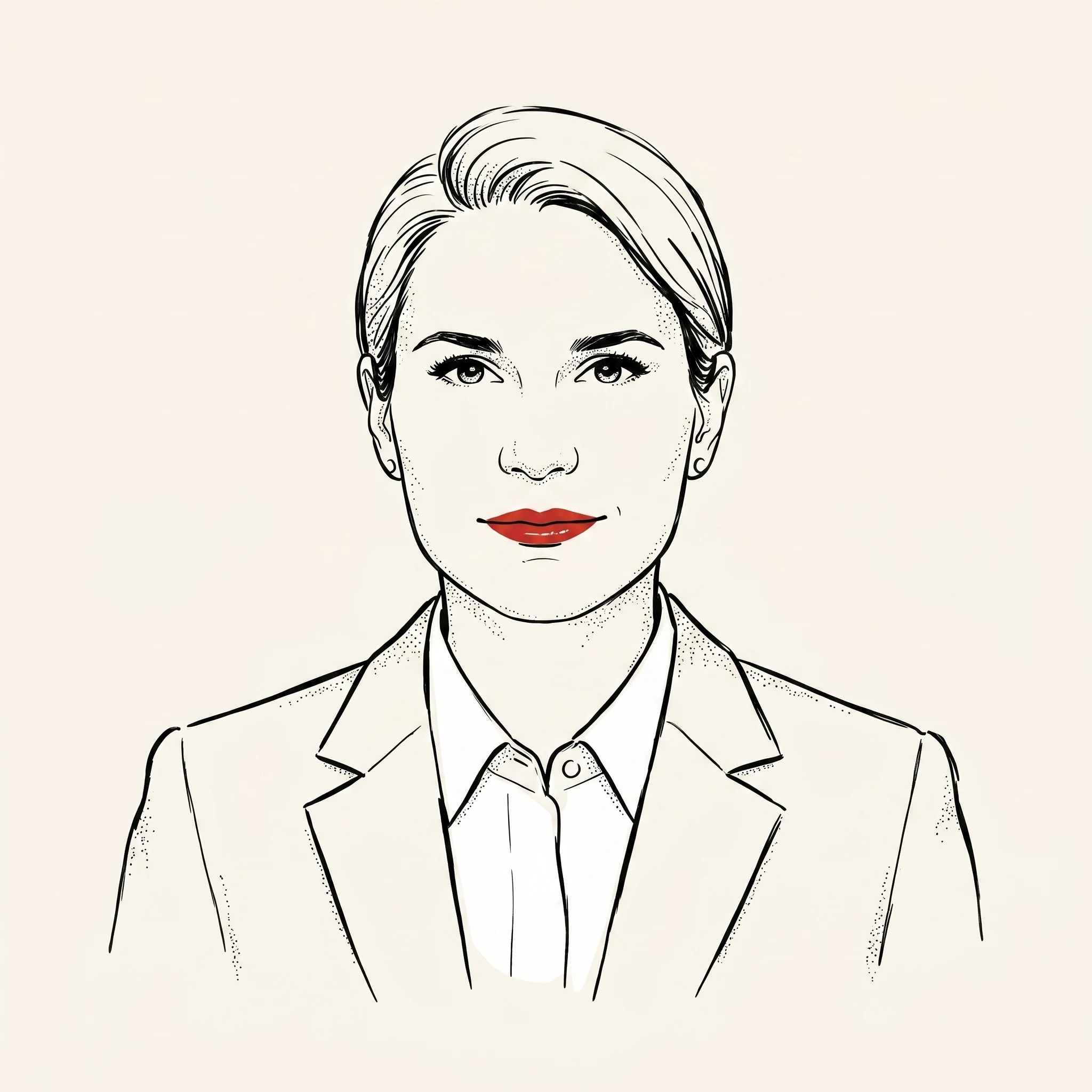
Reviewed by Nicole Bohne, life insurance advisor — life, 3rd pillar, tax optimization · FINMA F01536402 · Last updated 11 June 2026





45 minutes with Nicole. Free.
In English · With or
We'll send you a short intake form so we understand your needs before we speak.
Your details
You're booked
Check your email for a calendar invite and a video call link.
In brief
Self-employed without BVG: maximum pillar-3a contribution is 20% of net self-employment income, capped at CHF 36,288 in 2026 (federal cap, Art. 7 BVV3). Self-employed with voluntary BVG affiliation: capped at the employed CHF 7,258 — but the BVG affiliation itself adds a separate tax-deductible contribution lane on top. The big-3a calculator below runs your specific case. The architecture decisions (split across multiple 3a accounts, banking vs insurance 3a allocation, withdrawal staging at retirement) typically matter more than the year-one contribution amount.
Run your contribution cap.
Self-employed without BVG contribute up to 20% of net self-employment income, capped at CHF 36,288 (2026). Self-employed with voluntary BVG: capped at the employed CHF 7,258. The calculator below applies the federal-cap rule.
Interactive · Indicative
Estimate your self-employed 3a cap.
Enter net self-employment income and BVG status. The calculator runs the federal-cap rule under Art. 7 BVV3 (2026). Indicative; the precise figure depends on your specific accounting (deductible business expenses, AHV self-employment contributions, depreciation).
- Net income
- CHF 120,000
- Applicable cap rule
- 20% of net income
- Maximum 3a contribution 2026
- CHF 24,000
20% rule binds — your income × 20% is below the CHF 36,288 ceiling.
Let Nicole run the architecture against your specific situationIndicative federal-cap calculation. Specific cap depends on AHV-recognised net self-employment income, which itself depends on accounting deductions. Verify with the cantonal tax administration before acting.
Are you actually in the bigger regime?
Most expats who call themselves freelancers in conversation don't qualify for the grosse 3a — because they are paid through structures that count as employment for AHV purposes. Three questions settle it before you assume the bigger cap applies.
- 01Are you registered with your cantonal AHV-Ausgleichskasse as Selbständigerwerbend?This is the legal trigger. Without that registration you are not self-employed for AHV purposes — regardless of how you describe yourself, how you invoice, or what your tax filing looks like. The Ausgleichskasse confirms status by letter, and that letter is your evidence.
- 02Do you receive a payslip with pillar 2 deductions — from any client or umbrella company?If yes, you have a BVG pension and the employed CHF 7,258 cap applies, even when you do separate self-employed work alongside. Mixed-status cases are common; the rule is that 3a follows the BVG pillar 2.
- 03Are you the owner of an AG or GmbH that pays you a salary?Then you are an employee of your own company, not self-employed for AHV/BVG purposes. Which cap applies depends on whether the company has affiliated with a Vorsorgeeinrichtung — most have, by default, so the employed cap applies. Some founders deliberately run the early years without a pillar 2, which opens the bigger cap but gives up employer disability and survivor cover — the two gaps income protection and term life insurance exist to close.
The pattern: a true Selbständigerwerbender registered with the AHV and holding no pillar 2 gets the bigger cap. Anything else — verify before assuming. This is the single most common eligibility mistake we see, and correcting it late means a year of contributions declared against the wrong ceiling.
BVG or no BVG — which one fits.
A · No BVG
Big-3a lane
Up to 20% of net income, capped CHF 36,288. Simpler architecture; the 3a lane carries all the tax-deductible retirement-savings flow. Suits early-career and modest-income self-employed.
B · Voluntary BVG
Two-lane architecture
Pillar 2 (employee + employer portions, both deductible) plus pillar 3a at the employed CHF 7,258 cap. Adds disability cover. Larger total deductible-contribution capacity at higher income levels.
C · Buy-in lever
Pillar 2 buy-ins
Voluntary BVG opens the buy-in lever — fill verified contribution gaps with tax-deductible lump sums (CHF 50–200k+ at higher earnings). Often the largest tax-deductible lever available to higher-earning self-employed.
D · Hybrid timing
Switch mid-career
Many self-employed start without BVG, then switch to voluntary BVG as income grows past CHF 200k. The transition timing matters; pre-switch big-3a balances stay; post-switch contributions follow the new cap.
Loss years, deferral, regime switches.
A · Loss year
Business loss years
A loss year (negative net income) means no 3a contribution lane that year — the 20% rule yields zero. The cap is calendar-year-by-calendar-year; missed years cannot be backfilled. Nicole's review covers carry-forward planning when income recovers.
B · Income deferral
Deferral strategies
Income recognition timing (invoice issuance, billing cycle, end-of-year work-in-progress) shifts which calendar year the income falls in — and therefore the 3a cap that year. For lumpy revenue, structuring recognition into the right tax year is a small but real lever.
C · Voluntary BVG → no BVG
Switching back to big-3a
Terminating a voluntary BVG affiliation reopens the big-3a cap (CHF 36,288 vs CHF 7,258). The accumulated pillar-2 balance stays in vested benefits. The switch is feasible but rarely cheap — ideally planned at year-end with the next-year 3a structure already in place.
D · Mixed income
Self-employed plus employed
If the employed side meets the BVG threshold (CHF 22,680 in 2026), the employed CHF 7,258 cap typically applies — the self-employed side does not unlock the big-3a regime. For sub-threshold employment income, the no-BVG self-employed treatment may apply. Nicole models the specific case.
Income timing and the tax return itself are a tax advisor's work, not ours. expat-services.ch, one of our own sites, explains what an English-speaking tax advisor or Treuhand does for the self-employed.
The conversation after the cap.
- 01Account count and withdrawal stagingMultiple 3a accounts let you withdraw across different tax years at retirement, flattening the privileged-rate progression. The lever matters most at cumulative balances above CHF 250k.
- 02Banking vs insurance 3a allocationSelf-employed often have weaker pillar-2 disability cover, which makes insurance 3a's premium waiver more meaningful. Hybrid sizing is the typical recommendation. Bank vs insurance.
- 03Mortgage-collateral applicationPillar 3a balance can be pledged as collateral for a Swiss owner-occupied mortgage — useful lever for self-employed who don't have employer-backed financing options.
- 04Voluntary BVG decision (the prior question)No-BVG vs voluntary-BVG decision based on income trajectory, age, household structure. Combined-cap modelling against the no-BVG big-3a alternative. The decision is rarely reversible cheaply. Without BVG there is no pension-fund pension for your partner and children; what AHV, BVG and UVG pay survivors shows the difference in francs.
Some of the people we've advised
Over 3,500 individual situations, calmly read against the Swiss system — since 2017.

★★★★★
“She assisted and guided me through the entire process of obtaining my Swiss pension refund.”
Ryan K. · Google
★★★★★
“What I appreciated the most is that she was trying to help me solve my problem, not simply sell me an insurance policy.”
Thomas P. · Google

★★★★★
“After several bad experiences with other brokers, working with Mr. Robert Kolar was a completely different experience.”
Dragos H. · Google

★★★★★
“Robert is the best person to partner with if you need to do difficult things such as relocate.”
E. Burke-Murphy · Google
★★★★★
“My session with Robert was one of the most efficient consultation sessions I'd ever had.”
Milad F. · Google

★★★★★
“I was looking to change a supplementary insurance plan, and Robert guided me with professionalism and patience.”
Diana M. · Google

★★★★★
“After returning to Switzerland from abroad, Robert was a tremendous help consulting me about all the changes.”
Steven · Google

★★★★★
“Highly recommend consulting Expat Savvy before making any online insurance comparisons.”
Zendaya B. · Google

★★★★★
“Working with Ben was great. Very prompt and responsive. Would highly recommend to anyone.”
Michele · Google
★★★★★
“Beide arbeiten Hand in Hand und haben die individuellen Anforderungen unserer Kunden immer im Blick.”
Katharina K. · Google
★★★★★
“She assisted and guided me through the entire process of obtaining my Swiss pension refund.”
Ryan K. · Google

★★★★★
“What I appreciated the most is that she was trying to help me solve my problem, not simply sell me an insurance policy.”
Thomas P. · Google

★★★★★
“After several bad experiences with other brokers, working with Mr. Robert Kolar was a completely different experience.”
Dragos H. · Google
★★★★★
“Robert is the best person to partner with if you need to do difficult things such as relocate.”
E. Burke-Murphy · Google

★★★★★
“My session with Robert was one of the most efficient consultation sessions I'd ever had.”
Milad F. · Google

★★★★★
“I was looking to change a supplementary insurance plan, and Robert guided me with professionalism and patience.”
Diana M. · Google
★★★★★
“She assisted and guided me through the entire process of obtaining my Swiss pension refund.”
Ryan K. · Google
★★★★★
“What I appreciated the most is that she was trying to help me solve my problem, not simply sell me an insurance policy.”
Thomas P. · Google
★★★★★
“After several bad experiences with other brokers, working with Mr. Robert Kolar was a completely different experience.”
Dragos H. · Google
★★★★★
“Robert is the best person to partner with if you need to do difficult things such as relocate.”
E. Burke-Murphy · Google
★★★★★
“My session with Robert was one of the most efficient consultation sessions I'd ever had.”
Milad F. · Google
★★★★★
“I was looking to change a supplementary insurance plan, and Robert guided me with professionalism and patience.”
Diana M. · Google
Illustrated portraits — households we've advised on health, pension, and the architecture between them.
Pension architecture with Nicole.
Nicole Bohne
Life insurance, insurance-wrapped 3a, tax optimization · FINMA F01536402
Nicole now handles the booking flow for life-insurance and 3rd-pillar architecture reviews. The call checks whether an insurance wrapper belongs in the plan, whether banking 3a is cleaner, and which tax lever actually fits your household. Written summary within 3 working days.
Book your first Swiss insurance reviewFrequently asked — self-employed pension.
How much can self-employed contribute to pillar 3a in 2026?
What counts as 'self-employed' for pillar 3a purposes?
Should self-employed open a voluntary BVG (pillar 2) affiliation?
What's the deadline for self-employed pillar 3a contributions?
How is self-employed net income defined for the 20% rule?
Can self-employed have multiple pillar 3a accounts?
Can self-employed use their pillar 3a as mortgage collateral?
What if my self-employment income varies year to year?
When should self-employed switch from no-BVG to voluntary BVG?
What happens to pillar 3a if I become employed (and gain BVG)?
How much does the self-employed pension review cost?
How does Nicole help with self-employed pension architecture?
Pension architecture, read properly.
We've been running self-employed pension reviews since 2017. The CHF 36,288 lever, the no-BVG vs voluntary-BVG decision, the big-3a architecture, the withdrawal staging at retirement — applied to your specific freelance, consulting, or small-business situation. Free, 45 minutes, in English, with Nicole.
Book your first Swiss insurance review