
How to get alternative therapies covered by Swiss health insurance.
Swiss basic insurance covers a defined list of complementary medicine methods (Art. 35 KVG, KLV Annex 1) — but only when delivered by a qualified physician. Supplementary outpatient products extend coverage to non-physician practitioners on EMR or ASCA registers. The interaction is the conversation.
Updated

45 minutes with Robert. Free.
In English · With or
We'll send you a short intake form so we understand your needs before we speak.
Your details
You're booked
Check your email for a calendar invite and a video call link.
In brief
Basic insurance (KVG) covers five complementary methods — homeopathy, anthroposophic medicine, traditional Chinese medicine (TCM), phytotherapy, and neural therapy — only when delivered by a physician with the relevant certificate. Outside the physician channel, basic doesn't cover. Supplementary outpatient insurance (VVG) extends to non-physician practitioners registered with EMR (ErfahrungsMedizinisches Register) or ASCA (Schweizer Stiftung für Komplementärmedizin) — typical reimbursement 75–90% up to an annual cap (CHF 1,000–5,000 depending on product). Verify your therapist's register status before booking; verify your insurer's specific list of accepted methods (TCM, osteopathy, naturopathy, kinesiology, shiatsu, craniosacral therapy — coverage varies).
Alternative therapies — step by step.
-
Confirm what basic insurance actually covers
Article 35 KVG and KLV Annex 1 list five complementary methods covered by basic insurance: homeopathy, anthroposophic medicine, TCM, phytotherapy, neural therapy. Only when delivered by a physician who holds the relevant FMH certificate (typically Fähigkeitsausweis Komplementärmedizin). Non-physician practitioners — even excellent ones — fall outside basic coverage.
Tip Find a physician practising the method you need via the SAGB / FMH registers, or ask the cantonal medical society. Physician-delivered TCM acupuncture is covered under basic; non-physician acupuncture isn't.
-
Identify the EMR / ASCA register status of your therapist
EMR (ErfahrungsMedizinisches Register) and ASCA (Schweizer Stiftung für Komplementärmedizin) are the two private registers that Swiss supplementary insurers reference. A therapist registered in both is the safest bet — most insurers accept either. Ask the therapist before the first session; both registers publish online searchable databases. Without register membership, supplementary won't reimburse.
-
Read your supplementary product's specific method list
Different products cover different lists. Some cover TCM, osteopathy, naturopathy, kinesiology, craniosacral therapy, shiatsu, Bach flowers, etc. Some explicitly exclude certain methods. The brochure summary isn't the contract: read the actual policy document to confirm method × therapist-register combination is covered. We do this before you sign.
-
Verify the reimbursement rate and annual cap
Typical supplementary outpatient reimbursement: 75–90% per session up to an annual cap. Cap range CHF 1,000–5,000 depending on product tier. Some products have per-session limits (e.g., max CHF 100/session); some have category caps (e.g., max 60% of cap on a single method). Verify the specifics before committing to long courses of treatment.
-
Confirm prescription requirements where they apply
Some methods on some supplementary products require a physician prescription (Verordnung) before treatment starts. Common with osteopathy and physiotherapy. Without the prescription, sessions don't qualify for reimbursement. Verify the requirement at the policy level before the first session.
-
Submit claims correctly to avoid rejection
Submit the original receipt + the EMR/ASCA register number + the therapist's professional credentials within 30 days of treatment (some insurers up to 5 years; check). Use your insurer's claim portal or post; many reject digital photos of receipts that aren't clearly legible. Keep originals until reimbursement confirms.
-
Plan the architecture if your therapy course is long-term
For a multi-year therapy course (e.g., chronic pain treatment, ongoing osteopathy), the supplementary product choice matters more than the headline premium. Higher-tier outpatient supplementary with a larger annual cap typically pays back over a 2–3-year horizon. The 45-minute review covers the architecture for ongoing complementary medicine usage.
What we catch every week.
Trap 01
The basic-covers-all assumption
Households assume their TCM acupuncturist is covered under basic because 'basic insurance covers TCM.' Basic covers TCM only via physicians with the relevant certificate. Non-physician TCM is outside basic.
Trap 02
The EMR-only practitioner
Some therapists are registered with EMR but not ASCA, or vice versa. Some insurers accept only one. Verify your insurer's accepted register list before the first session.
Trap 03
The annual-cap surprise
Households start a long therapy course in February, hit the annual cap by August, and discover the rest of the year is self-funded. Plan the cap against the planned course length.
Trap 04
The brochure-vs-contract gap
The brochure says 'TCM, osteopathy, naturopathy.' The contract has specific method lists, register requirements, and prescription clauses. Read the contract before signing.
These four are specific to this topic. The four we check in every review — from the age-curve trap to the 3-month deadline — are in the four traps deep-dive.
A real-pattern case.
Anonymised pattern
A household in Zürich with one adult on long-term physiotherapy plus monthly osteopathy. Existing supplementary covered physiotherapy under prescription but excluded osteopathy from non-physician practitioners. The household had been self-funding osteopathy at CHF 130/session, ~CHF 1,560/year. Our review confirmed: switching to a higher-tier outpatient supplementary (with EMR/ASCA acceptance and a CHF 3,000/year cap) cost ~CHF 38/month more in premium (CHF 456/year) but reimbursed 80% of the osteopathy. Net annual saving: ~CHF 800. Underwriting was clean (the physiotherapy was prescription-based, not flagged as ongoing). The architecture switch paid back in year 1.
Aggregated from real client patterns. Names anonymised; figures illustrative.

Beyond this guide — the 45-minute review.
The 45-minute review with Robert reads your specific supplementary product's method list, verifies your therapists' register status, calculates the annual-cap economics against your actual usage, and recommends the supplementary tier that fits the therapy course you're actually planning. We say 'self-fund and skip the upgrade' when the math doesn't earn the premium difference; we say 'upgrade now' when the cap math compounds.
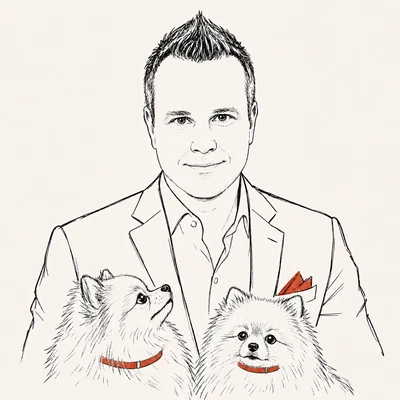
Robert Kolar
Insurance advisor — health insurance specialist
20+ years in Swiss insurance. Reads the basic and supplementary contract for every review. The 45-minute review covers the four-lever framework applied to your address, age, household and existing coverage. German, English, Czech.
Common mistakes.
Assuming basic covers non-physician TCM
Basic covers TCM only via physicians with the relevant FMH certificate. Non-physician TCM is supplementary territory only.
Booking before checking register status
Verify EMR or ASCA membership before the first session. Without it, supplementary won't reimburse regardless of the therapist's quality.
Reading brochure not contract
Method lists, register requirements, prescription clauses live in the contract. The brochure summary often misrepresents.
Ignoring the annual cap
Long therapy courses hit caps mid-year. Plan the cap against the course length before starting.
Skipping the prescription where required
Some methods on some products require physician prescription. Without it, sessions don't qualify regardless of register status.
Frequently asked — alternative therapies coverage.
Does Swiss basic insurance cover alternative medicine?
What is EMR and ASCA?
How much will my supplementary insurance reimburse for alternative therapy?
Do I need a doctor's prescription for alternative therapy reimbursement?
Which Swiss insurers have the best alternative therapy coverage?
Can I get TCM acupuncture covered if my acupuncturist isn't a physician?
What if my therapist isn't on EMR or ASCA?
How do I claim alternative therapy reimbursement?
Alternative therapy coverage, read properly.
We've been reading supplementary product method lists for expat households since 2017. The basic-via-physician path, the EMR/ASCA register check, the annual-cap math against your actual therapy plan, the prescription clauses where they apply. Free, 45 minutes, in English, with Robert. We say 'don't upgrade' more often than the market suggests — most households use less alternative therapy than the brochure assumes.
Book your first Swiss insurance review