
Health insurance
How to switch Swiss health insurance — Nov 30 deadline.
Switching Swiss basic insurance is annual, free, no health declaration. Supplementary is harder. The 5-step practical guide for the next contract year.
Key takeaways
- Swiss basic insurance can be switched annually with notice by 30 November for 1 January start. Acceptance is mandatory by federal law (Article 4 KVG) — no health declaration required. The system is designed to make switching basic insurance easy.
- Supplementary insurance is harder: 3-month notice typical, multi-year contracts common, health declaration required for the new product, exclusions possible. Most expats are better served by switching only basic.
- The paperwork takes 30 minutes once you know the steps. We handle it for clients — the cancellation letter, the new application, the timing — as part of the audit-and-switch service. Free, in English, no obligation.
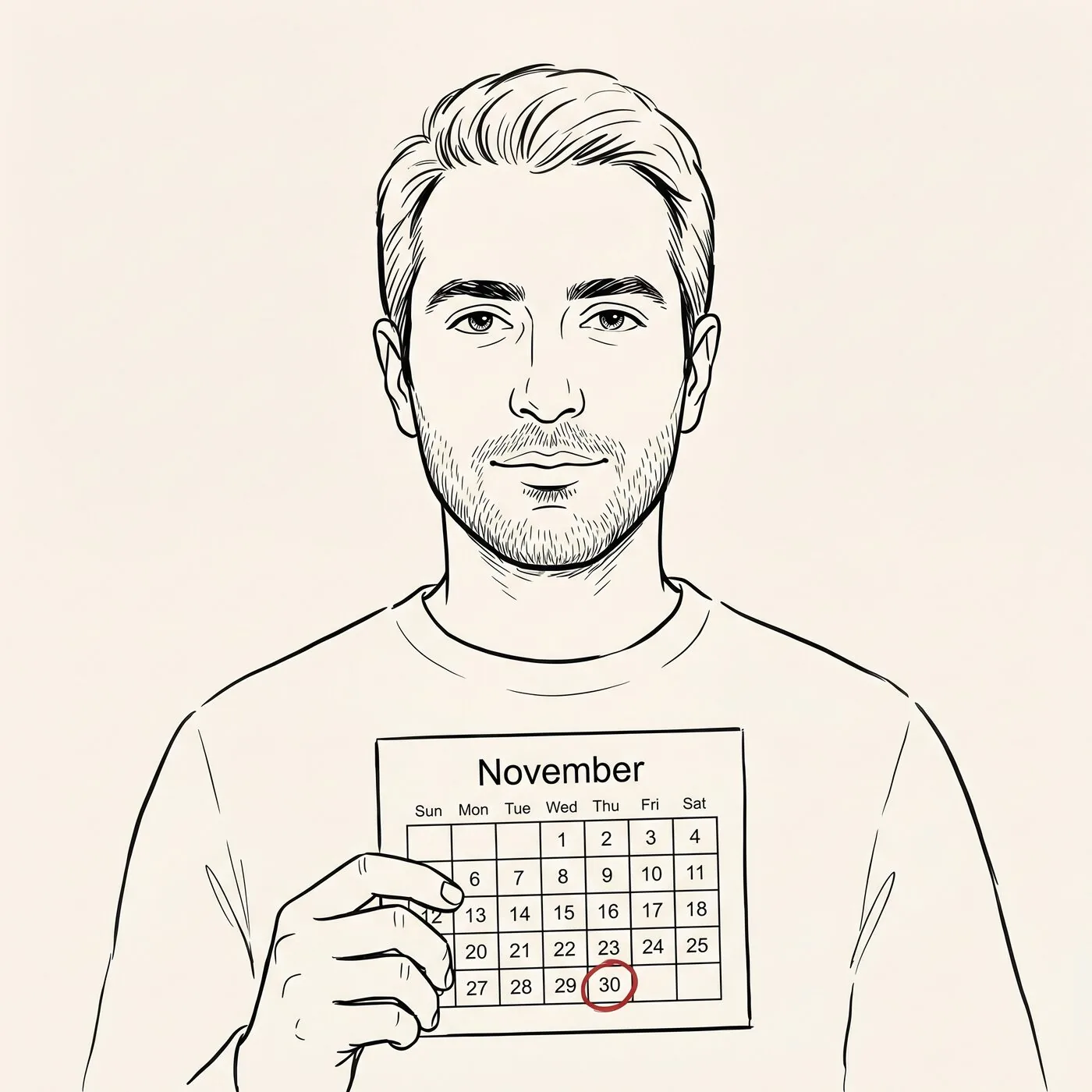
Switching Swiss basic insurance is one of the easiest decisions in the Swiss insurance system: annual, free, no health declaration, no exclusions, mandatory acceptance by federal law. The reason most expats don’t switch isn’t that the system is hard — it’s that the paperwork looks intimidating and nobody walks them through it. The 30 November deadline is the forcing function. The 5-step process is the path. And if you’d rather we just handle the paperwork for you, that’s also the offer — free, as part of the audit-and-switch consultation.
Why switching is easier than it looks.
Swiss basic insurance has the most consumer-friendly switching rules of any insurance product in the Swiss market. It’s annual. It’s free. It requires no health declaration. The new insurer cannot legally refuse you. None of these things are true of supplementary insurance, which is why most expats confuse the two products and assume both are equally hard. They’re not. Basic switching is mechanical paperwork. Supplementary switching is a different decision with different risk profile entirely.
The structure makes basic switching genuinely safe to do every year if you want — there is no downside to switching, and the cost is one cancellation letter sent by Einschreiben (registered post). The system was designed this way deliberately, because Swiss federal law expects active consumer comparison to keep the basic-insurance market competitive.
Swiss insurance switching deadlines and rules, 2026.
| Insurance type | Cancellation deadline | Notice required | Health declaration | Acceptance | Multi-year contract typical |
|---|---|---|---|---|---|
| Basic insurance, Standard model | ◆ 30 Nov for 1 Jan • optional 31 Mar for 1 Jul (CHF 300 Franchise only) | 1 month | None | ◆ Mandatory by law (Art. 4 KVG) | No |
| Basic insurance, alternative models (Hausarzt / HMO / Telmed / Pharmed / Hybrid) | ◆ 30 Nov for 1 Jan only | 1 month | None | ◆ Mandatory by law | No |
| Basic insurance, higher Franchise (CHF 500–2,500) | 30 Nov for 1 Jan only | 1 month | None | Mandatory by law | No |
| Supplementary outpatient (myFlex, Vital, COMPLETA, etc.) | typically 30 Sept for 1 Jan | 3 months | Required | Discretionary | Often 3-year contracts |
| Supplementary hospital (Liberty, Hospita, etc.) | typically 30 Sept | 3 months | Required | Discretionary | Often 3-year contracts |
| Dental supplementary | typically 30 Sept | 3 months | Required | Discretionary | Annual or multi-year |
The one extra rule worth knowing: under Article 7 paragraph 2 KVG, if you’re on the Standard model with the lowest Franchise (CHF 300), you have a second annual switching window — notice by 31 March for a 1 July switch. Anyone on an alternative model or a higher Franchise is limited to the 30 November window. This rule is genuinely useful for clients who realised in February or March that they were overpaying — they don’t need to wait nine months to act.
Quick check
Want us to verify your specific cancellation deadlines and handle the paperwork?
The 5-step switching process.
The mechanics. Once you know the steps, the entire process takes about 30 minutes of your time. Most clients we work with would rather we just do it; that’s also fine.
Audit your current setup.
Confirm you're actually overpaying before switching. Review your current insurer, basic-insurance model, Franchise (deductible), and every supplementary product. The full diagnostic is in our companion post: [Are you overpaying on Swiss health insurance?](/blog/review-health-insurance-switzerland-overpaying/) — most expats find at least one CHF 50/month saving they didn't know about.
Identify your target insurer and model.
Compare premiums on priminfo.admin.ch for your canton, age, and chosen model. Decide whether to switch insurer, switch model (Standard → Hausarzt / HMO / Telmed), or both. The model decision typically saves more than the insurer decision — covered in detail in [Swiss health insurance models explained](/blog/health-insurance-models-switzerland/) and [Swiss health insurance — and why 'cheapest' is partly the wrong question](/blog/cheapest-health-insurance-switzerland-2026/).
Send the cancellation letter to your current insurer.
In writing. Registered post (Einschreiben). Letter must arrive by 30 November (not just be post-marked by then). Reference your policy number. Specify the cancellation date as 31 December of the current year. Plan to mail by 25 November to be safe with postal-delivery time. Keep the post receipt — it's your legal proof of timely cancellation.
Apply to the new insurer.
Application form (paper or online), specify start date 1 January, attach the cancellation confirmation when you receive it. Application typically processed in 2–4 weeks. No health declaration is required for basic insurance because acceptance is mandatory by law (Article 4 KVG). The new insurer cannot refuse you, regardless of age, health status, or claim history.
Verify the new insurance card arrives.
New insurance card (Versichertenkarte) typically arrives in December. If it doesn't arrive by mid-December, contact the new insurer directly — applications occasionally get stuck in processing queues at year-end. Your old card stops being valid 31 December. Show the new card at any provider visit from 1 January onwards.
The cancellation letter — what it actually contains.
The Kündigungsschreiben is short. The legal requirements are straightforward and the structure is the same at every Swiss insurer:
- Sender block: your full name, full address, date
- Recipient: insurer’s full legal name and registered postal address
- Subject line in German or French: “Kündigung der Grundversicherung per 31. Dezember [year]” / “Résiliation de l’assurance-maladie de base au 31 décembre [year]”
- Policy number (Versicherungsnummer / numéro de police) — found on your insurance card or any letter from the insurer
- One sentence: “I hereby cancel my basic health insurance contract effective 31 December [year].”
- Signature
That’s the entire letter. The reason we offer the drafted letter as part of the consultation isn’t that it’s complicated to write — it’s that getting one detail wrong (wrong policy number, wrong cancellation date, wrong recipient address) can void the cancellation, and there’s no second chance until the next year. We send hundreds of these letters a year and we know which insurer requires which exact subject-line wording.
The special cancellation rights most expats don’t know.
Outside the standard 30 November window, exactly one scenario opens a special cancellation right under federal law: a premium increase notified by your insurer. Under Article 7 paragraph 2 KVG, when your insurer raises basic-insurance premiums (mid-year or at year-end), they must notify you at least two months before the new rate takes effect. From the date you receive that notification, you have one month to cancel — even if the standard window has closed.
The annual premium-update letter (typically arriving in late October every year for the 1 January adjustment) effectively activates this special right for everyone — but the standard 30 November deadline is the same date as the special-right window in this case. The mid-year application of the rule is what matters: if your insurer announces a price hike in March effective 1 June, you can still cancel even though it’s outside the 30 November window.
Two clarifications expats commonly get wrong:
Moving to a different canton does NOT trigger a special cancellation right for basic insurance, despite a widespread expat-community misconception. Your basic policy follows you; the premium recalculates at the new canton’s rate. If the recalculation is a material increase, you may then have a special right under the premium-increase rule. But the canton move itself isn’t a trigger.
Marriage, divorce, and family-status changes don’t automatically trigger special rights either at the federal level. Some insurers offer flexibility as a courtesy, but they’re not legally required to. The federal-law list of special-right scenarios is shorter than most internet forums suggest.
Switching supplementary — the harder cousin.
If basic switching is mechanical, supplementary switching is editorial. The structural differences:
- 3-month notice typical (not 1 month like basic)
- Multi-year contracts common — especially 3-year minimum on supplementary outpatient and hospital products
- Health declaration required on every new supplementary application
- Exclusions possible — pre-existing conditions can be excluded permanently or trigger rejection
- Acceptance is discretionary — the new insurer can refuse you on health grounds
- Pre-existing-condition window — many policies have a 12-month waiting period before benefits apply to specific categories like maternity
Most expats are better served by keeping current supplementary and switching only basic. The two products solve different problems and the friction profiles are completely different. The exception is when you’ve identified a clear over-buy in supplementary (Hospital Private when Semi-Private would have served, dental high-tier when basic dental works for your usage) — and even then, the right move depends on your current health declaration status. We cover the trade-offs in Swiss hospital insurance — semi-private vs private vs private worldwide.
The honest summary: about 80% of switching savings come from basic; the other 20% from supplementary right-sizing typically requires careful navigation that’s hard to DIY. The audit identifies which side of the ratio applies to you.
The four traps in switching.
trap 01
The age-curve trap.
Some supplementary plans are cheap at 32 and brutal at 55. We model the 20-year cost, not the signup price.
trap 02
The 3-month deadline.
New residents must register for basic insurance within 3 months or face penalty surcharges and canton-assigned coverage.
trap 03
Coverage that pays vs. coverage that fights.
Every insurer's brochure looks generous. The real question is which ones actually approve claims.
trap 04
We match coverage to your life.
We check actual needs and recommend only what fits, even if that means fewer products than expected.
The longer reference on each trap — federal-law foundation, the typical misunderstanding, the cost, what we do — sits in the four-traps deep dive.
These map directly to the switching mechanics. The age-curve trap appears as the “post-marked by 30 November” assumption — the cancellation letter must ARRIVE by 30 November, not be post-marked by then. Late-November mail is risky. Send by registered post by 25 November. The three-month deadline is the supplementary-cancellation window itself — typically 30 September for 1 January, which falls before the basic-insurance window and is easy to miss when you’re focused on the November date. Coverage that pays vs coverage that fights is the single-letter-for-both trap — cancelling basic and supplementary in one letter often gets one or the other rejected; send separate letters with separate policy numbers and separate cancellation dates. And matching coverage to your life is the “I missed the deadline, I’ll wait a year” trap — check whether you have a special cancellation right (premium increase) before defaulting to next year, and remember the 31 March mid-year window if you’re on Standard CHF 300.
Why most expats want us to handle the paperwork.
The audit-and-switch consultation is where the work actually happens. The diagnostic identifies whether switching saves you money. The switching service is the action that follows. Both are free for clients because Swiss insurance advisors are paid by the insurer when a client switches — not by the client. The transparency on this point matters: we disclose our compensation structure openly, we’re FINMA-registered, and we tell clients honestly when switching isn’t worth it (which happens about 15% of the time).
What we do for clients during the switching service:
- Audit your current setup — basic insurer, model, Franchise, every supplementary product
- Run cantonal premium comparison — finding the cheapest insurer at your model and Franchise
- Confirm the math — modelling annual saving from the recommended switch
- Draft the cancellation letter — exact wording for your insurer, your policy number, the right cancellation date
- Draft the new application — pre-filled with your details for signature
- Track the paperwork — confirmation receipt, new insurance card delivery, gap-coverage check
The total client time investment is approximately 30 minutes for the consultation plus 5 minutes to sign and send the letters. The total saving for a typical client who hasn’t audited in 2–3 years is CHF 600–1,800/year, compounding for as long as they remain on the better setup. The maths is hard to argue with.
The honest answer.
For most expats most years, switching Swiss basic insurance is the highest-leverage 30-minute decision available — CHF 50–150 per month saved for the cost of one cancellation letter sent by registered post. The system is designed to make switching basic insurance easy. The system is also designed to make supplementary switching deliberately harder, which is why most expats should leave supplementary alone unless they have specific reason to change.
If the paperwork is the obstacle, that’s the part we handle. The audit identifies whether the switch is worth it. The switching service is the action that follows. Both are free. The next 30 November deadline is the next opportunity. If you’ve read this far, you already suspect a switch could save you money — the consultation is the next step, and the cancellation letter is something we’ll have drafted and ready before the call ends.
Common questions
Frequently asked.
When can I switch my Swiss health insurance?
What is the cancellation deadline for Swiss basic insurance?
Do I need a health declaration to switch Swiss basic insurance?
Can I switch supplementary insurance separately?
What is the special cancellation right for premium increases?
How long does it take to switch Swiss insurance?
What happens if my old insurer doesn't confirm cancellation?
Can I switch insurance after moving to a different canton?
By the team