
Swiss pension planning — the system for expats, calmly read.
Three pillars — AHV, BVG, 3a/3b. Tax-deductible by federal law (Art. 33 DBG, Art. 81 BVG). Materially different mechanics if you're leaving Switzerland in 5 years vs settling. The 45-minute review with Nicole Bohne runs your specific gap analysis, tax-effect modelling per canton, and a written summary within 3 working days.
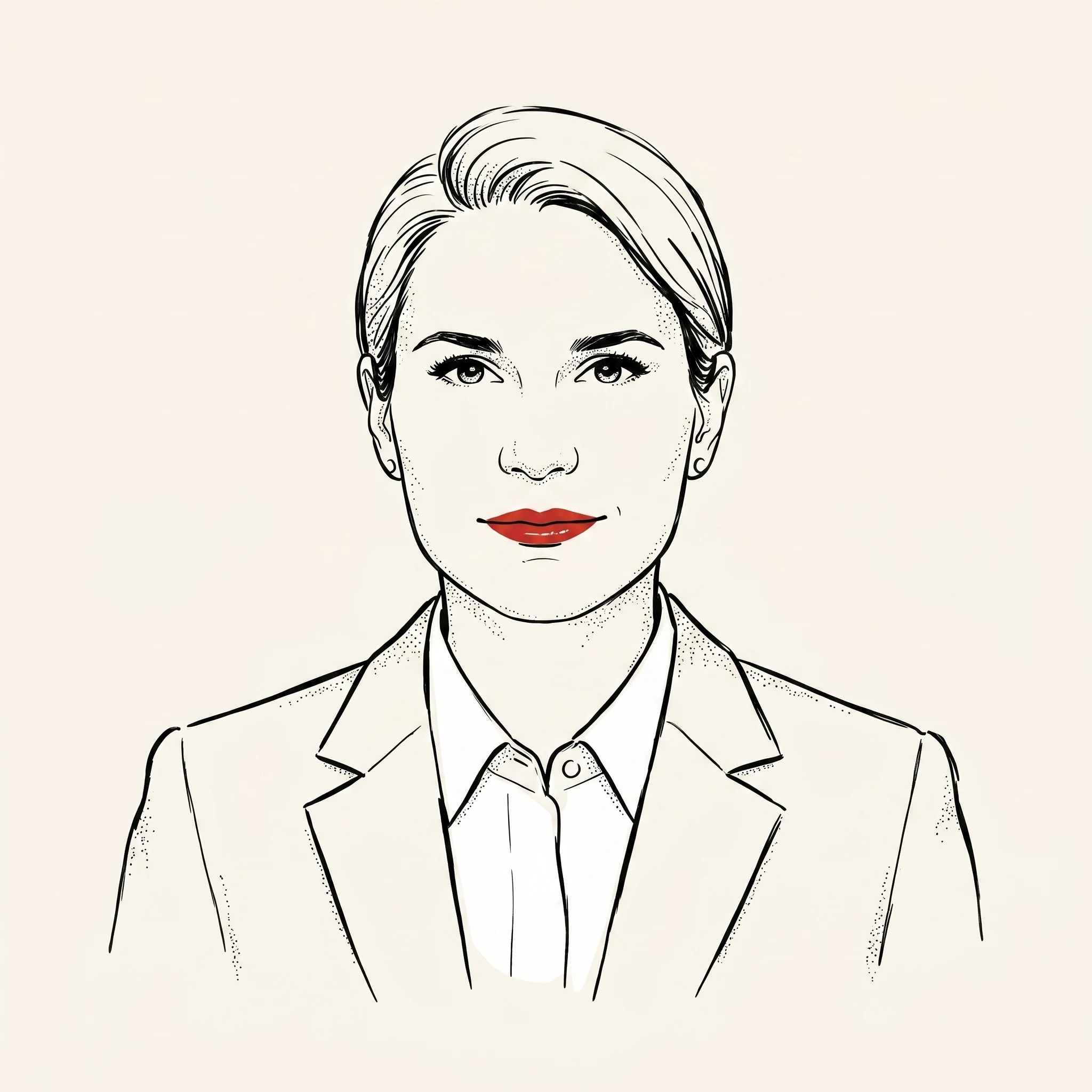
Reviewed by Nicole Bohne, life insurance advisor — life, 3rd pillar, tax optimization · FINMA F01536402 · Last updated 25 August 2026






45 minutes with Nicole. Free.
In English · With or
We'll send you a short intake form so we understand your needs before we speak.
Your details
You're booked
Check your email for a calendar invite and a video call link.
In brief
Switzerland runs a three-pillar pension system: AHV (state, mandatory), BVG (occupational, employer-linked), and 3rd pillar (private, optional). The 3rd pillar splits into pillar 3a (tax-deductible up to CHF 7,258 employed / CHF 36,288 self-employed without BVG in 2026; withdrawal-restricted under Art. 3 BVV3) and pillar 3b (no tax deduction, no cap, fully flexible). For expats, the architecture decisions hinge on planned years in Switzerland, leaving-Switzerland tax mechanics, and whether insurance 3a's premium-waiver-and-death-benefit features fit an actual coverage gap. We sell insurance 3a; we tell you when banking 3a is the cleaner answer.
Can expats open a pillar 3a? Yes — with Swiss AHV income.
Yes. Pillar 3a is open to anyone with earned income that is subject to AHV contributions in Switzerland — nationality and permit type don't matter (Art. 7 BVV3). If you are employed here, or self-employed and paying AHV, you can open one; if you have no Swiss AHV income, you can't.
What changes for expats is not the right to open a 3a but what to do with it: how long you will stay decides whether pillar 3a or 3b fits, and leaving Switzerland has its own withdrawal rules. Start with 3a or 3b, then what leaving does to your 3a.
The Swiss pension system, at a glance.
Switzerland's pension system is structured by federal law into three pillars. Together they target a retirement income of around 60% of final salary; the gap between that target and your desired retirement income is what the 3rd pillar fills.


~30%
Pillar 1 · AHV
State, pay-as-you-go.
Basic subsistence.
~60%
+ Pillar 2 · BVG
Occupational, capital-funded.
With your employer.
your target
+ Pillar 3 · 3a / 3b
Private, voluntary.
The part you control.
1
State pension
AHV / IV — Bundesgesetz über die AHV
Mandatory state pension covering basic subsistence. Funded pay-as-you-go via salary contributions (employee + employer) plus federal subsidy. Pays a monthly pension at retirement age (65 for men; for women 64 up to the 1960 cohort, rising in three-month steps to 65 from the 1964 cohort under AHV 21).
2
Occupational pension
BVG — Bundesgesetz über die berufliche Vorsorge
Mandatory for employees earning above the BVG threshold (CHF 22,680 in 2026). Employer co-contributes. Capital-funded: your contributions plus interest accumulate in a vested-benefits account. Voluntary buy-ins (Einkauf) are tax-deductible — a powerful lever for higher earners.
3
Private savings
3a / 3b — BVV3 (Säule 3a) + private (Säule 3b)
Optional individual savings. Pillar 3a: tax-deductible up to CHF 7,258 employed / CHF 36,288 self-employed without BVG (2026); withdrawal-restricted. Pillar 3b: no tax deduction, no cap, fully accessible.
| Pillar | Type | Mandatory? | Key 2026 figure | Pension target |
|---|---|---|---|---|
| 1 — AHV / AVS | State pension, pay-as-you-go | Yes — all residents | Max single CHF 2,520/mo · couple CHF 3,780/mo | ~30% of average salary |
| 2 — BVG / LPP | Occupational, capital-funded | Yes — above CHF 22,680/yr | Entry threshold CHF 22,680/yr | ~30–40% additional |
| 3 — Säule 3a / 3b | Private, tax-advantaged (3a) | Voluntary | Cap CHF 7,258 employed / CHF 36,288 self-employed | Fills the remaining gap |
The numbers behind pillar 1: the maximum AHV pension needs 44 contribution years plus an average annual income of at least CHF 90,720 — each missing year cuts roughly 2.27%. The minimum single pension is CHF 1,260/month, and from December 2026 all AHV recipients receive a 13th annual pension payment for the first time. Behind pillar 2: retirement-savings contributions only begin the January after age 24, and the fill mechanism for missing years is the BVG buyback (Einkauf) — each buyback franc is deductible at your marginal rate (often 30–45% for high earners), and mid-career arrivals routinely hold CHF 50,000–200,000 of buyback room they don't know about. Your Pensionskasse certificate (Vorsorgeausweis) shows your specific room.
Why expats need a different read on the system.
Swiss-born locals plan pension with a 30–40-year horizon and zero cross-border exposure. Most expats have neither.
The Swiss pension system rewards depth and time. For expats, the architecture decisions hinge on three variables that don't appear in standard Swiss pension advice: how long you'll stay, where you'll go next, and which pension regime your destination respects.
A 5-year-in-Switzerland horizon changes the pillar 3a math entirely. Leaving for the UK is straightforward (treaty network); leaving for the USA hits FATCA mechanics that most Swiss advisors don't know. Settling permanently and buying property activates the home-purchase withdrawal lever (Art. 3(3) BVV3). Each shape needs different architecture.
Three variables that change the architecture
- How long you'll stay
- 5 years vs 25 years changes the pillar-3a NPV calculation entirely.
- Where you'll go next
- EU vs UK vs USA vs Asia — destination tax-treaty interaction varies materially.
- Destination pension respect
- Some jurisdictions tax Swiss pensions on receipt; some tax on accrual; some don't tax at all.
How much smaller your Swiss pension is — by arrival age
The arrival-age math makes the point concretely. AHV wants 44 contribution years; BVG wants employer-matched saving from age 25. Arrive at 30 and you reach ~35 AHV years (~80% of the full pension) with 5 years of missing BVG accumulation; arrive at 40 and the AHV gap alone is ~43%. The later the arrival, the more architectural weight 3a and the BVG buyback have to carry — bilateral social-security agreements can count home-country years toward the qualifying period, though not toward the Swiss benefit itself.
| Arrival age | AHV years to 65 | AHV gap | Typical strategy |
|---|---|---|---|
| 25 | ~40 | ~9% | 3a maximisation; modest buyback if applicable |
| 30 | ~35 | ~20% | 3a max + BVG buyback prioritisation |
| 35 | ~30 | ~32% | Aggressive BVG buyback + 3a max |
| 40 | ~25 | ~43% | Buyback as largest single lever; 3a + 3b combined |
| 45 | ~20 | ~55% | Architecture review essential; 3b alongside 3a + buyback |
Nicole's review is built around these variables — gap analysis runs against the realistic horizon, not the default Swiss-permanent-resident assumption.
The architecture decisions Nicole walks through.
Every pension review covers the same four work areas — applied to your specific household, horizon, and destination plans.
01 · Insurance vs banking 3a
Architecture fit
Insurance 3a (premium waiver, death benefit) where there's an actual coverage gap; banking 3a (cheaper, flexible) when no gap warrants the wrap. Most clients hold both.
02 · Contribution timing
The tax-year lever
Pay the full 3a allowance by 31 December for current-year deduction. Late payment misses the deduction. We map the schedule against your specific cantonal tax stack.
03 · Account count
Staggered withdrawal
Multiple 3a accounts let you withdraw across different tax years — flattening the privileged-rate progression. The lever matters most for higher 3a balances at withdrawal.
04 · Regime eligibility
Big-3a or standard
Self-employed without BVG: up to 20% of net income, capped CHF 36,288. Self-employed with voluntary BVG: capped at the employed CHF 7,258. The eligibility check is the first conversation.
The six pages — where to start.
Each page below covers one specific decision in the architecture. Pick the question closest to where you are.
How much tax can the 3a save me?
The federal-cantonal-communal math, with a calculator for your canton and income.
02What happens to my 3a when I withdraw?
Withdrawal tax by canton, staggering across tax years, and the leaving-Switzerland mechanics.
03Bank or insurance 3a — which fits me?
Cheaper and flexible vs guaranteed value and family protection — the honest comparison.
04Pillar 3a or 3b — tied or flexible?
Tax-deductible but restricted, or free but undeducted. A 3-question quiz routes you.
05Which 3a provider should I pick?
VIAC · frankly · finpension · banks · insurance contracts, side by side with costs.
06Self-employed — what is my lever?
Up to 20% of net income, capped CHF 36,288 — the grosse-3a math and a calculator.
What we sell — and what we don't.
We are an independent insurance advisory regulated under Article 45 VAG, FINMA-registered F01067278. We sell insurance 3a — life-insurance-wrapped pillar 3a contracts with premium waiver in disability and a guaranteed death benefit. We do not sell banking 3a apps (VIAC, frankly, finpension, traditional bank 3a). When banking 3a is the cleaner answer for your situation, we say so. We earn no commission on banking-3a recommendations — that's the point of the disclosure.
Restraint as differentiator, not slogan. "Banking 3a is the cleaner answer" appears in roughly 60% of pension reviews — most clients don't have a coverage gap that warrants insurance 3a's wrap. The conversation is honest because we have nothing commercial to gain by recommending the other side.
What clients say
★★★★★
I had an excellent experience working with Nicole Bohne. She assisted and guided me through the entire process of obtaining my Swiss pension refund, making what could have been a complicated process incredibly straightforward and stress-free. Nicole was always friendly, professional, knowledgeable, and extremely efficient. She kept me informed every step of the way, answered all my questions promptly, and ensured everything was handled smoothly from start to finish. I highly recommend Nicole and her company to anyone needing assistance with Swiss pension refunds or related services.
★★★★★
I was a bit lost with all the administrative procedures after moving to Switzerland, especially regarding my health insurance situation. Nicole took the time to understand my case and explain everything very clearly. She answered all my questions, explained the legal aspects and gave me practical advice on how to move forward. What I appreciated the most is that she was trying to help me solve my problem, not simply sell me an insurance policy.
★★★★★
My session with Robert — without a doubt — was one of the most efficient consultation sessions I'd ever had. He is honest, straightforward and transparent from the outset. He knows the insurance industry inside out. He helped me with my situation without any reservation. You confide to him within minutes into the session and take his honest and unbiased advice.
★★★★★
Robert is the best person to partner with if you need to do difficult things such as relocate and navigate the complications of healthcare insurance in Switzerland. Robert went beyond what was expected and in a very caring way making sure that we had a really good arrival in Switzerland.
See more reviews
★★★★★
Extremely helpful and knowledgeable consultation in all facets of current health insurance offerings. Highly recommend consulting Expat Savvy before making any online insurance comparisons.
★★★★★
I highly recommend this office for all types of insurance. After having several bad experiences with other brokers, working with Mr. Robert Kolar was a completely different experience. He is incredibly professional, friendly, and solved my complex insurance problems in a timely manner. What I appreciated most was that he took all the time needed to make sure I truly understood my policies.
★★★★★
I had an excellent experience working with Robert. I was looking to change providers for one of my supplementary insurance plans, and he guided me through the process with professionalism, patience, and expertise. Thanks to his guidance, I was able to secure a policy that perfectly suits my needs.
★★★★★
After returning to Switzerland from abroad, Robert from Expat Savvy was a tremendous help consulting me about all the changes. He took the time to show me several options and definitely went the extra mile compared to other agents.
★★★★★
Working with Ben was great. Very prompt and responsive. Would highly recommend to anyone!
★★★★★
Benjamin überzeugt durch seine hervorragende Organisation und klare Kommunikation, Robert durch seine kompetente und ehrliche Beratung. Beide arbeiten Hand in Hand und haben die individuellen Anforderungen unserer Kunden immer im Blick — absolut empfehlenswert!
Continue with 3rd pillar.
- 3a vs 3b The two pension wrappers, compared on tax, lock-up, and access.
- Bank vs insurance 3a When the wrap pays for itself — and when banking 3a is the cleaner answer.
- Providers VIAC, frankly, finpension, traditional bank 3a, insurer 3a — what each is for.
- Tax optimisation The federal cap, the cantonal multipliers, and where the marginal franc lands.
- Withdrawal guide Six legal triggers, staggered withdrawal, and the cantonal-tax window.
- Life insurance Where the 3rd pillar stops and protection begins — term, mixed, and insurance-wrapped 3a.
- For the self-employed The CHF 36,288 ceiling under pillar 3a — and when pillar 2 still wins.
Articles.
- Pillar 3a for the self-employed Why the higher ceiling rarely lands the way the brochures suggest.
- Retirement planning for foreign residents What arriving at 30, 35, or 40 does to the math — and the five levers, in order.
- First job in Switzerland — the setup What your employer now covers, what stays yours, and why the 3a start date beats every optimisation.
- BVG buyback — buying into your pension The CHF 50,000–200,000 lever on your Vorsorgeausweis, and the three rules that govern it.
- Leaving Switzerland — pension withdrawal EU vs non-EU, the vested-benefits route, and the cantonal-tax decision.
- VIAC vs frankly vs finpension The three banking-3a apps side by side — for the 60% who don't need a wrap.
Some of the people we've advised
Over 3,500 individual situations, calmly read against the Swiss system — since 2017.

★★★★★
“She assisted and guided me through the entire process of obtaining my Swiss pension refund.”
Ryan K. · Google

★★★★★
“What I appreciated the most is that she was trying to help me solve my problem, not simply sell me an insurance policy.”
Thomas P. · Google

★★★★★
“After several bad experiences with other brokers, working with Mr. Robert Kolar was a completely different experience.”
Dragos H. · Google

★★★★★
“Robert is the best person to partner with if you need to do difficult things such as relocate.”
E. Burke-Murphy · Google
★★★★★
“My session with Robert was one of the most efficient consultation sessions I'd ever had.”
Milad F. · Google

★★★★★
“I was looking to change a supplementary insurance plan, and Robert guided me with professionalism and patience.”
Diana M. · Google

★★★★★
“After returning to Switzerland from abroad, Robert was a tremendous help consulting me about all the changes.”
Steven · Google

★★★★★
“Highly recommend consulting Expat Savvy before making any online insurance comparisons.”
Zendaya B. · Google

★★★★★
“Working with Ben was great. Very prompt and responsive. Would highly recommend to anyone.”
Michele · Google
★★★★★
“Beide arbeiten Hand in Hand und haben die individuellen Anforderungen unserer Kunden immer im Blick.”
Katharina K. · Google
★★★★★
“She assisted and guided me through the entire process of obtaining my Swiss pension refund.”
Ryan K. · Google

★★★★★
“What I appreciated the most is that she was trying to help me solve my problem, not simply sell me an insurance policy.”
Thomas P. · Google

★★★★★
“After several bad experiences with other brokers, working with Mr. Robert Kolar was a completely different experience.”
Dragos H. · Google
★★★★★
“Robert is the best person to partner with if you need to do difficult things such as relocate.”
E. Burke-Murphy · Google

★★★★★
“My session with Robert was one of the most efficient consultation sessions I'd ever had.”
Milad F. · Google

★★★★★
“I was looking to change a supplementary insurance plan, and Robert guided me with professionalism and patience.”
Diana M. · Google
★★★★★
“She assisted and guided me through the entire process of obtaining my Swiss pension refund.”
Ryan K. · Google
★★★★★
“What I appreciated the most is that she was trying to help me solve my problem, not simply sell me an insurance policy.”
Thomas P. · Google
★★★★★
“After several bad experiences with other brokers, working with Mr. Robert Kolar was a completely different experience.”
Dragos H. · Google
★★★★★
“Robert is the best person to partner with if you need to do difficult things such as relocate.”
E. Burke-Murphy · Google
★★★★★
“My session with Robert was one of the most efficient consultation sessions I'd ever had.”
Milad F. · Google
★★★★★
“I was looking to change a supplementary insurance plan, and Robert guided me with professionalism and patience.”
Diana M. · Google
Illustrated portraits — households we've advised on health, pension, and the architecture between them.
Pension architecture with Nicole.
Nicole Bohne
Life insurance, insurance-wrapped 3a, tax optimization · FINMA F01536402
Nicole now handles the booking flow for life-insurance and 3rd-pillar architecture reviews. The call checks whether an insurance wrapper belongs in the plan, whether banking 3a is cleaner, and which tax lever actually fits your household. Written summary within 3 working days.
Book your first Swiss insurance reviewFrequently asked — pension planning.
What is the Swiss three-pillar pension system?
How much is tax-deductible in pillar 3a in 2026?
What's the difference between pillar 3a and pillar 3b?
Should I choose insurance 3a or banking 3a?
What happens to my pillar 3a if I leave Switzerland?
Can self-employed people make larger pillar 3a contributions?
What is the BVG and how does pillar 2 work?
Is pillar 3a worth it for expats planning to leave Switzerland?
How is pillar 3a taxed at withdrawal?
How much does a Swiss pension consultation cost?
What does Nicole Bohne's 45-minute review cover?
Can foreigners participate in the Swiss pension system?
How much is the maximum AHV pension in 2026?
Why do late-arriving expats face a Swiss pension gap?
How much is the Swiss state pension (AHV) reduced for expats?
Can I buy back into the Swiss 2nd pillar (BVG buyback / Einkauf)?
Pension architecture, read properly.
The three pillars, the 3a tax lever, the leaving-Switzerland mechanics, the insurance-vs-banking architecture — applied to your specific situation. We sell insurance 3a where it fits an actual coverage gap; we tell you when banking 3a is the cleaner answer. Free, 45 minutes, in English, with Nicole.
Book your first Swiss insurance review